

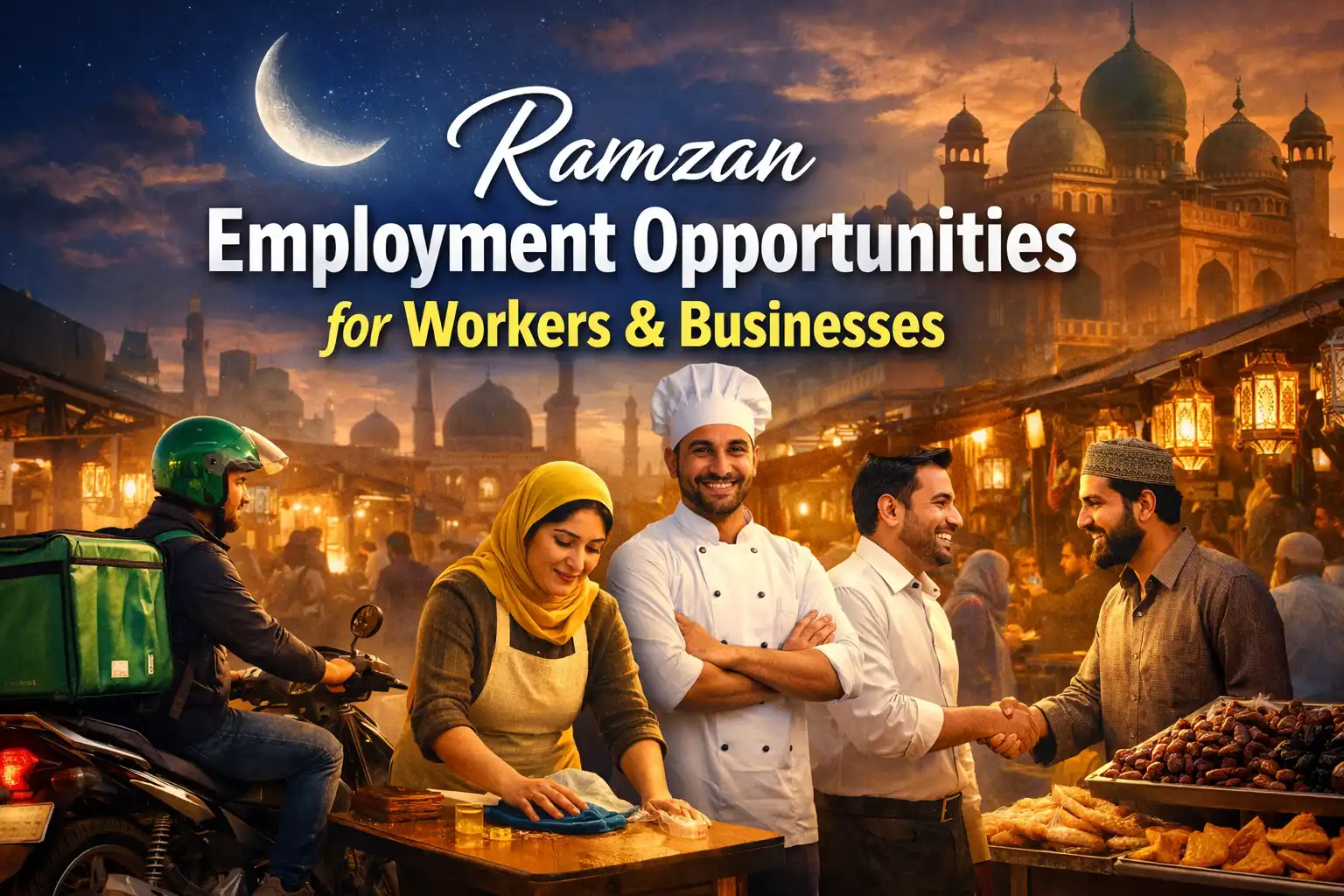
Ramzan Employment Opportunities for Workers & Businesse
- Feb 13, 2026
- 0
Ramzan brings a unique transformation to Pakistan's economy every year. The holy month changes consumer behavior, shopping patterns, and daily routines across the country. Markets stay open until late night, food consumption peaks, charity activities multiply, and households need extra help managing their busy schedules. This seasonal shift creates thousands of temporary employment opportunities that benefit both workers seeking income and businesses looking to meet increased demand.
For workers who need quick income, lack formal qualifications, or want flexible hours, Ramzan offers a golden window. The demand for household staff, delivery personnel, restaurant workers, and helpers reaches its annual peak during these thirty days. Many families who normally manage without hired help decide they need assistance during Ramzan due to increased cooking, cleaning, and hosting responsibilities. Similarly, businesses from small roadside stalls to established restaurants scramble to hire additional staff to handle the surge in customers breaking their fast.
Understanding these opportunities and acting quickly can make a significant difference to your income or business success during this period. Whether you are searching for work or planning to expand your team temporarily, this month provides practical options worth exploring.
Why Employment Demand Surges During Ramzan
The employment landscape shifts dramatically when Ramzan begins. Several factors combine to create this increased demand across multiple sectors. Families alter their daily schedules completely, with most people waking up before dawn for sehri and preparing elaborate iftar meals each evening. This routine requires substantially more cooking, grocery shopping, and kitchen work than regular months.
Working women who usually handle their own household tasks find it challenging to maintain fasting while managing cooking and cleaning after office hours. Professional families with both spouses working often hire temporary help specifically for Ramzan. The tradition of inviting relatives and friends for iftar means more mouths to feed and more preparation needed. Elderly family members may also need additional care and assistance during fasting hours.
On the business side, restaurants and food outlets experience their busiest season. The culture of breaking fast outside home or ordering iftar meals has grown significantly in urban Pakistan. Food delivery services see order volumes double or triple compared to normal months. Retail stores, especially those selling clothes, groceries, and gifts, extend their operating hours and need extra staff to manage crowds. Bakeries producing special Ramzan items like samosas, pakoras, and fruit chaat cannot keep up with demand using their regular workforce alone.
Charitable organizations and mosques distribute free iftar meals and ration packages, requiring volunteers and paid workers to handle logistics. The increased focus on charity and helping others creates opportunities in the nonprofit sector as well. Construction and renovation work in homes also picks up as families want their houses ready before Eid, leading to more demand for daily wage laborers and skilled workers.
Employment Opportunities for Job Seekers
Workers without formal education or specialized skills find Ramzan particularly welcoming. The month offers income possibilities that do not require certificates, lengthy interviews, or previous experience in many cases. For those wondering about entry-level positions suitable for beginners, the household service sector leads the way. Families hire cooks specifically to handle sehri and iftar preparation, with daily wages ranging significantly based on city and cooking expertise.
Maids and cleaning staff experience high demand as homes require more frequent cleaning due to increased cooking and guest visits. Many households that never hired domestic help before will bring someone in just for Ramzan. The working hours are often flexible, with some families needing help only during evening hours to prepare iftar and clean up afterward. This arrangement suits women who have daytime responsibilities or students looking for part-time income.
Drivers find excellent opportunities during Ramzan as families go out more frequently for iftar dinners, shopping, and visiting relatives. Private car owners who do not usually employ drivers may hire one temporarily for evening hours when they feel fatigued from fasting. Delivery riders experience the busiest month of their year, with food delivery platforms offering bonus incentives to attract more riders. The evening hours from maghrib until midnight become peak earning time when orders flow continuously.
Waiters and restaurant staff positions multiply as eateries expand their seating capacity and extend hours. Small roadside iftar stalls and temporary food setups hire helpers to serve customers, handle cash, and maintain cleanliness. These positions typically pay daily wages and require no prior experience. The informal food sector provides quick employment for anyone willing to work hard during busy evening hours.
Grocery stores, supermarkets, and local markets need additional sales staff and packers during Ramzan. The shopping rush before iftar time and late night crowds require more hands on deck. Many stores hire temporary workers on a monthly contract basis specifically for Ramzan. Similarly, bakeries and sweet shops producing traditional Ramzan foods need extra staff for preparation, packaging, and sales counter duties.
For those with some skill, tailors and seamstresses find abundant work as people order new clothes for Eid. Small home-based tailoring operations often hire helpers during Ramzan to meet deadlines. Skilled workers like electricians, plumbers, and painters also find steady work as families complete pending home repairs and renovations before the festive season.
Part-Time and Evening Work Options
The unique timing of Ramzan activities creates perfect conditions for part-time employment. Many workers maintain their regular daytime jobs while taking on additional evening work during Ramzan to boost income. Offices and workplaces in Pakistan typically reduce working hours during fasting, allowing employees to leave early. This schedule opens up evening hours for supplementary employment.
Students on summer break find this timing ideal for earning while schools and colleges remain closed. Young people work at iftar stalls, deliver food orders, or help at retail stores during peak hours. The condensed working schedule means you can earn decent money by working just four to five hours in the evening when demand peaks. This flexibility attracts workers who cannot commit to full-time employment but need extra income.
Home-based work opportunities also expand during Ramzan. Women who cannot work outside due to family responsibilities can prepare food items from home and supply them to small shops or sell directly to neighbors. Samosas, spring rolls, pakoras, and traditional drinks like rooh afza and lassi find ready buyers. Some women form small groups where they collectively prepare larger quantities and share the work and earnings.
Online and delivery-based businesses also open opportunities for home-based workers. Taking orders through WhatsApp and delivering homemade iftar items has become a viable business model in residential areas. Workers can start with minimal investment and scale based on demand without leaving their homes. This model particularly suits mothers with young children who need to stay home but want to contribute to household income.
Opportunities for Employers and Businesses
Business owners face both a challenge and an opportunity during Ramzan. The surge in customer demand means potential for significantly higher revenue, but only if you have adequate staff to handle the rush. Restaurants that fail to hire enough servers and kitchen staff lose customers to competitors because of slow service and long wait times. Food businesses that properly staff up can see their monthly revenue double during Ramzan compared to regular months.
Smart business owners begin their hiring process before Ramzan starts. Waiting until the month begins means competing with every other business for the same pool of available workers. Offering slightly better wages or perks like free iftar meals for your staff helps attract reliable workers. Some businesses rehire the same seasonal workers year after year, building a reliable temporary workforce familiar with their operations.
For entrepreneurs considering new ventures, seasonal business concepts specific to this holy month present excellent opportunities. Temporary iftar stalls require minimal capital to establish and can generate substantial profit in thirty days. Setting up near mosques, busy markets, or office complexes where people break their fast ensures steady customers. Popular items like samosas, pakoras, fruit chaat, and drinks require simple preparation and sell quickly.
Home delivery services for iftar meals have become increasingly popular in Pakistani cities. Starting a small delivery kitchen requires hiring a cook and a couple of delivery riders. Operating costs remain low if you work from home initially, and social media provides free marketing. Many successful food businesses in Pakistan today started as Ramzan-only operations that later expanded into year-round ventures.
Retail businesses selling groceries, dates, dried fruits, and Ramzan essentials benefit from hiring additional sales staff and cashiers. The evening rush in markets requires more employees to prevent chaos and maintain service quality. Clothing stores preparing for Eid shopping also need extra hands to manage the crowds and maintain inventory. Temporary hires during Ramzan often prove themselves valuable enough to receive offers for permanent positions after the month ends.
Service businesses also find opportunities during this period. Cleaning services that offer deep cleaning packages for homes before Eid attract many clients. Catering services for iftar and sehri events stay booked throughout the month. Event management companies organize corporate iftars and charity events, requiring temporary staff for setup, service, and cleanup. Transportation services for late night shopping and family visits also experience higher demand.
Hiring Tips for Businesses During Ramzan
Successful seasonal hiring requires planning and clear communication. Start your search at least two weeks before Ramzan begins to secure the best candidates. Word of mouth remains the most effective hiring method in Pakistan, so ask your current employees if they know reliable people looking for work. Many workers prefer jobs where someone they know already works, finding comfort in familiar faces. To streamline your hiring process and access a larger pool of verified candidates, consider signing up on Dostyy.com as an employer. The platform offers a free trial that provides 10 instant candidate matches based on your job requirements, plus 10 additional credits to contact more potential hires directly. This service proves especially valuable during Ramzan when time is limited and you need to fill positions quickly with reliable staff.
When interviewing candidates for household or business positions, focus on reliability and attitude rather than extensive experience for entry-level roles. Someone willing to learn and showing up consistently matters more than technical skills for most temporary positions. Clearly explain working hours, wages, and expectations during the hiring conversation to avoid misunderstandings later. Many disputes arise from unclear initial agreements about duties and compensation.
Consider offering daily wages rather than monthly salaries for very short-term hires. This arrangement reduces risk for both parties and allows workers to receive immediate payment for their work. However, for the full Ramzan period, weekly or bi-weekly payment schedules work better and encourage workers to stay committed. Include provisions for Eid bonus or gifts, which serve as both motivation and cultural expectation in Pakistan.
Small business owners should remember that temporary workers need basic training even for simple tasks. Spending an hour explaining your processes and standards prevents mistakes and improves service quality. Assign an experienced employee to supervise and guide temporary staff initially. Creating a welcoming environment where temporary workers feel respected increases their productivity and reduces turnover during the crucial month.
For household hiring, conduct brief trial periods before committing to the full month. Having a cook prepare one meal or a maid clean for a few hours helps assess their work quality and compatibility with your family. Trust your instincts about people entering your home, and always collect a copy of their identification card for security purposes. Requesting contact information of their previous employers for references remains a sensible precaution.
Income Potential and Earning Strategies
Workers entering the Ramzan job market want to understand realistic income expectations. Wages vary significantly based on location, with Karachi, Lahore, and Islamabad offering higher rates than smaller cities. Cooks hired for the full month typically earn between fifteen to thirty thousand rupees depending on their skill level and the household's requirements. Those working only evening shifts preparing iftar might earn eight to fifteen thousand for the month.
Maid usually receive daily wages ranging from five hundred to one thousand rupees in major cities, with full month positions paying twelve to twenty thousand rupees. Drivers hired for evening hours earn seven hundred to fifteen hundred rupees daily based on their experience and the city. Delivery riders on platforms like Foodpanda and Bykea can earn twenty to forty thousand rupees during Ramzan by working smart hours and accepting peak time bonuses.
Workers in restaurants and food establishments receive daily wages of six hundred to twelve hundred rupees plus tips, which can add substantially to income during busy Ramzan evenings. Retail staff in stores typically earn monthly salaries of fifteen to twenty-five thousand rupees for temporary positions. Skilled workers like tailors, electricians, and plumbers charge per job basis and can earn significantly more by working overtime during Ramzan's busy period.
Maximizing earnings during Ramzan requires strategic thinking beyond just working more hours. Delivery riders earn most by positioning themselves near popular restaurants before iftar time when orders surge. Food stall workers supplement base wages with tips by providing friendly, efficient service. Household workers sometimes manage multiple part-time positions by working morning shifts at one home and evening shifts at another, though this requires excellent time management and stamina while fasting.
Workers who build good relationships with employers often receive bonuses, Eid gifts, and requests to return next year. Reliability proves more valuable than speed in most positions. Showing up on time every day, maintaining cleanliness, and treating people respectfully leads to recommendations and higher paying opportunities. Many successful household staff members in Pakistan built their careers by proving themselves during initial Ramzan positions and receiving permanent job offers afterward.
For those starting small businesses like food stalls or home-based cooking, keeping costs low while maintaining quality determines profitability. Sourcing ingredients in bulk reduces expenses, and focusing on high-demand items like samosas and drinks rather than trying to offer everything keeps operations manageable. Pricing competitively while ensuring taste quality builds a customer base that returns daily and spreads word of mouth recommendations.
Special Opportunities for Women
Ramzan creates particularly valuable opportunities for women seeking income within cultural and family constraints. The nature of work during this month allows flexibility that regular employment often cannot provide. Many families prefer hiring female cooks and maids, especially for homes where women observe purdah or feel more comfortable with female staff. This preference creates steady demand for women workers during Ramzan.
Home-based food preparation offers women complete control over their work environment and schedule. Preparing traditional Ramzan items like samosas, pakoras, or traditional sweets from home allows earning while managing household responsibilities. Social media and WhatsApp business groups provide platforms to market these items within residential communities without needing a physical shop. Starting with neighbors and family friends builds initial customer base with minimal marketing costs.
Women skilled in sewing find abundant work as families order new clothes for Eid. Home-based tailoring allows flexible hours while earning substantial income during the rush season. Taking advance orders and working systematically helps manage the workload without overwhelming stress. Many women develop loyal customer bases during Ramzan that continue providing income throughout the year.
Teaching Quran to children during Ramzan provides another opportunity, as many parents want their children to learn and revise Quranic verses during the holy month. Women who have completed Quran education can offer home tuition or small group classes. This work aligns with religious values while providing income and requires minimal startup investment beyond basic teaching materials.
Some women work as facilitators connecting workers with employers, essentially operating informal placement services within their communities. Understanding both parties' needs and making reliable matches generates referral fees or commissions. This role leverages social networks and requires no capital investment, only time and communication skills.
Practical Tips for Job Seekers
Finding good employment during Ramzan requires proactive effort before the month begins. Waiting until the first day of Ramzan means many positions are already filled. Start your search during Shaban, the month before Ramzan, when families and businesses begin planning their staffing needs. Visit neighborhoods where you want to work and inquire at houses and shops directly. Personal visits often work better than phone calls for domestic positions.
Presenting yourself professionally matters even for informal jobs. Dressing neatly, speaking politely, and showing enthusiasm creates positive first impressions. For household positions, demonstrating knowledge about cooking, cleaning techniques, or childcare increases your chances. Being honest about your skills rather than exaggerating prevents disappointment and termination once work begins.
Asking friends, relatives, and neighbors about available positions remains the most effective job search method in Pakistan. Many families prefer hiring workers recommended by trusted sources rather than unknown candidates. Letting your entire network know you are seeking Ramzan employment increases the chances that opportunities come your way. Community mosques sometimes have informal job boards or word of mouth networks connecting workers with employers. Beyond traditional methods, creating a profile on Dostyy.com significantly expands your reach to potential employers actively searching for staff. The platform connects job seekers with verified employers across Pakistan, and many businesses specifically use Dostyy to find reliable workers quickly. Signing up as a candidate and completing your profile with accurate details about your skills and availability helps employers find you easily, often leading to multiple job offers during the busy season.
When negotiating wages, research typical rates in your area before discussions. Asking for significantly more than market rates reduces your chances, while accepting far less undervalues your work. Be ready to discuss your working hours, duties, and compensation clearly. Confirming verbal agreements in writing, even simple handwritten notes, prevents future disputes about terms.
For those new to the workforce without previous experience, emphasizing willingness to learn and reliability compensates for lack of experience. Many employers value honest, dependable workers over experienced but unreliable ones. Starting with slightly lower wages while proving yourself often leads to raises and better opportunities quickly. Building a reputation for quality work opens doors to higher paying positions in following years.
Workers should also understand basic safety and rights. Household workers should ensure someone knows where they are working and maintain regular contact with family. Delivery riders must follow traffic safety rules despite time pressure. Everyone should receive agreed upon wages promptly and not hesitate to politely remind employers if payment delays occur. Maintaining dignity while being respectful ensures fair treatment.
Conclusion
Ramzan transforms Pakistan's employment landscape each year, creating thousands of opportunities for workers while enabling businesses to meet surging demand. The holy month offers unique advantages for both job seekers needing flexible income and employers requiring temporary staffing solutions. Understanding these opportunities and acting early makes the difference between a successful Ramzan season and missed possibilities.
For workers, this month provides accessible entry points into employment regardless of education level or previous experience. The variety of positions available means almost anyone willing to work hard can find suitable opportunities matching their skills, circumstances, and availability. From household help to delivery services, from food preparation to retail assistance, Ramzan offers pathways to immediate income and sometimes longer-term career development.
Business owners and employers who plan their hiring strategically position themselves to capitalize on increased consumer spending during this period. Adequate staffing directly impacts customer satisfaction, operational efficiency, and ultimately profitability. The temporary nature of Ramzan hiring also provides low-risk opportunities to test new employees who might transition into permanent roles if they prove valuable.
The key to success lies in preparation and mutual respect. Workers should begin their search early, present themselves professionally, and commit to reliability once hired. Employers should offer fair wages, clear communication, and respectful treatment to attract and retain quality staff. Both parties benefit when expectations align and agreements are honored.
As Ramzan approaches each year, the opportunities are there for those ready to seize them. Whether you are seeking work to support your family or looking to hire staff to grow your business, this blessed month offers practical possibilities worth exploring. Start your preparations now, approach opportunities with sincerity and determination, and make this Ramzan beneficial not just spiritually but financially as well.
0 Comments
Add your review
Explore related articles

If you've been scrolling through job boards wondering what Servaid Pharmacy actually pays before you ...

dostyy

If you have spent any time looking at property listings in Lahore lately, you have probably noticed h...
dostyy

A family that recently moved into a villa near Lake City's Sector M spent their first two weeks doi...