

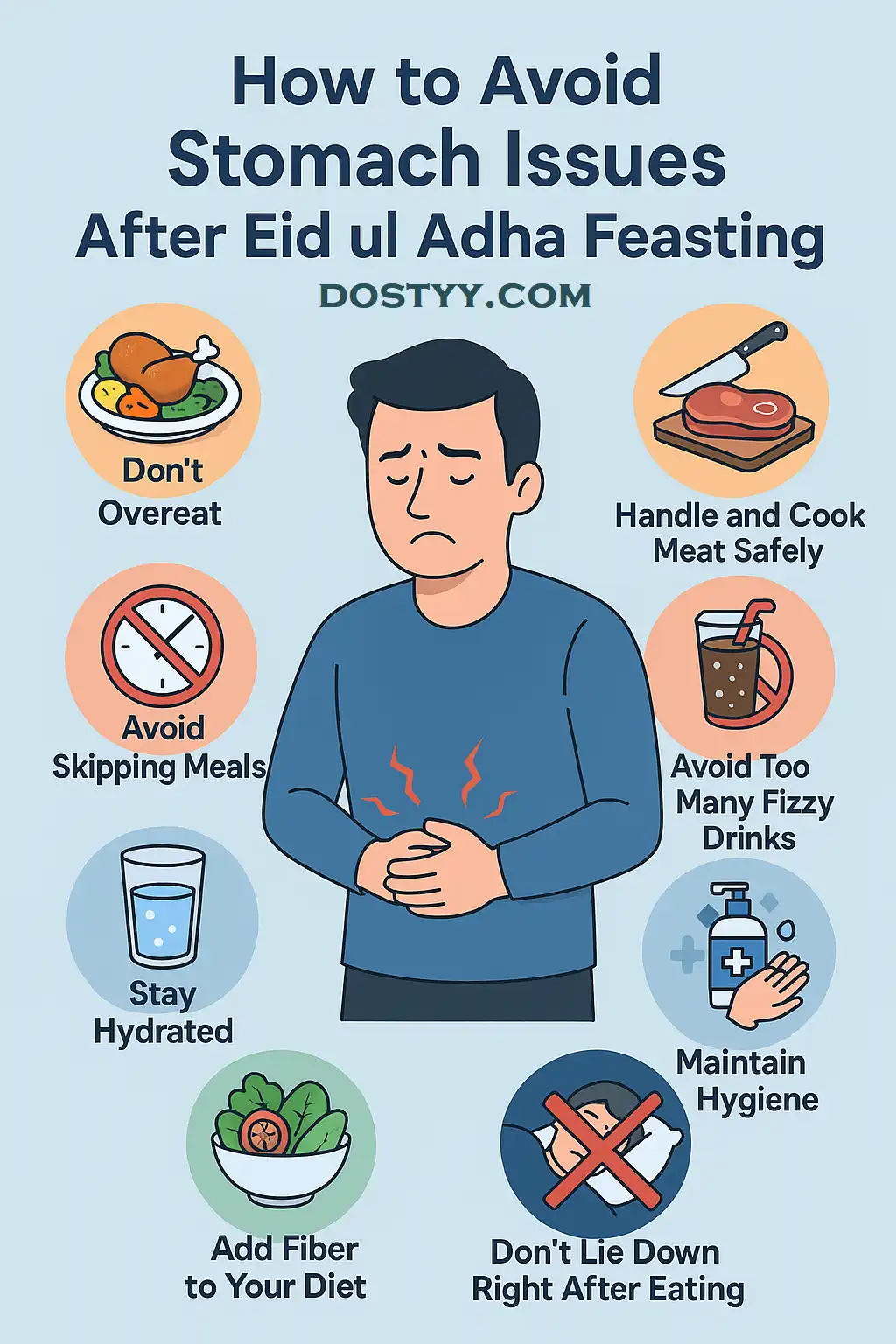
How to Avoid Stomach Issues After Eid ul Adha Feasting
- May 22, 2025
- 0
Eid ul Adha is one of the most cherished celebrations in the Muslim world — a time of sacrifice, gratitude, and of course, generous feasting. Families come together over heaping plates of qurbani meat, slow-cooked curries, sizzling BBQ, and traditional favourites. But with all that rich food, it's common to end up with bloating, acidity, or an unsettled stomach before the celebrations are even over.
The good news? A little mindfulness goes a long way. Here are eight practical, doctor-backed tips to help you enjoy every bite of your Eid feast — without paying for it later.
1. Eat Mindfully — Not Maximally
With so much food on the table, overeating almost happens by accident. The excitement of the occasion, the variety of dishes, and the social pressure to "try everything" can easily lead to more than your stomach can handle at one time.
What to do instead: Serve yourself smaller portions and go back for more only if you're genuinely still hungry. Eat slowly, chew thoroughly, and pause between bites. Your body takes about 20 minutes to signal fullness — give it that time before reaching for seconds.
2. Don't Skip Meals Before the Big Feast
Skipping breakfast or lunch to "save space" is one of the most common Eid mistakes. Arriving at a feast on an empty stomach triggers your body to overeat rapidly, which overwhelms digestion and leads to bloating, acidity, and discomfort.
Eat a light, balanced meal earlier in the day — something like eggs, yoghurt, or fruit — to keep your digestive system active and ready to handle the heavier meals ahead.
3. Stay Hydrated Throughout the Day
Heavy, protein-rich meals draw water from your body and slow digestion. Dehydration makes this worse, contributing to constipation and feelings of heaviness after eating.
Aim for 8–10 glasses of water across the day. Herbal teas like peppermint or ginger also aid digestion. Avoid drinking large amounts of water immediately before or during meals, as it can dilute stomach acid and slow things down further.
4. Add Fibre to Balance the Meat
Eid meals are naturally heavy on protein and fat, but light on fibre — and that imbalance is a primary driver of constipation and digestive discomfort. A typical Eid plate might include qurbani gosht, biryani, korma, and naan, with little to no vegetables.
Make a conscious effort to include a fresh salad, raita, fruit chaat, or whole grain roti alongside the meat dishes. Even a small portion of fibre-rich food with each meal makes a significant difference to how you feel the next day.
5. Handle and Cook Meat Safely
During Eid ul Adha, large quantities of meat are processed and stored within a short window of time. Improper handling is one of the leading causes of food poisoning and stomach infections during this period.
Refrigerate meat within two hours of slaughter
Cook all meat to the appropriate internal temperature (at least 75°C / 165°F)
Wash hands, knives, and cutting boards thoroughly between handling raw and cooked meat
Never leave cooked meat out for more than two hours in warm weather
For those planning a larger gathering, having skilled cooks handle the preparation makes a real difference. If you're hosting a party or BBQ this Eid, you might want to hire experienced BBQ and Eid party cooks in Lahore — professionals who know how to handle, marinate, and cook large quantities of meat safely and deliciously.
If you're selecting your own animal for Qurbani, our Guide to Selecting a Healthy Qurbani Animal in Pakistan walks you through what to look for before you buy.
6. Skip the Fizzy Drinks
Cold drinks may feel refreshing alongside a heavy meal, but carbonated beverages increase gas, cause bloating, and actually slow down digestion. The sugar content in most soft drinks adds to the overall load your body is already managing.
Better alternatives: plain water, homemade lemonade, fresh mint water, or a glass of lassi. Yoghurt-based drinks like lassi are particularly beneficial after meat-heavy meals — the probiotics support gut health and ease digestion naturally.
7. Keep Your Kitchen and Serving Area Clean
Food safety doesn't end at the cooking pot. Serving dishes left out in warm weather, shared utensils, and unwashed hands between handling raw and cooked meat are all common sources of bacteria that cause food poisoning or diarrhoea during Eid.
Wash serving spoons regularly, cover food when not being served, and ensure anyone helping in the kitchen is washing their hands frequently. Simple hygiene habits protect the whole family.
8. Take a Walk After Eating — Don't Lie Down
It's tempting to relax after a large meal, but lying down immediately worsens acid reflux and slows gastric emptying. Even a gentle 10–15 minute walk after eating can significantly improve digestion and reduce bloating.
If you must rest, wait at least two hours after a heavy meal before lying down, and try to keep your upper body slightly elevated.
Eid and the Economy: A Bigger Picture
Eid ul Adha isn't just a celebration for families — it's also a significant economic moment for thousands of Pakistanis. From butchers and transporters to domestic workers and food vendors, the festival generates livelihoods across the country. Read more in our blog: How Eid ul Adha Boosts Business and Jobs in Pakistan.
Final Thoughts
Enjoying the food of Eid ul Adha doesn't have to come at the cost of your health. With a little planning — eating in moderation, staying hydrated, including some fibre, and keeping meat safe — you can celebrate fully and feel good doing it.
From our team at Dostyy, wishing you a joyful, healthy, and blessed Eid ul Adha!
0 Comments
Add your review
Explore related articles
If you've been scrolling through job boards wondering what Servaid Pharmacy actually pays before you ...

dostyy

If you have spent any time looking at property listings in Lahore lately, you have probably noticed h...
dostyy

A family that recently moved into a villa near Lake City's Sector M spent their first two weeks doi...